


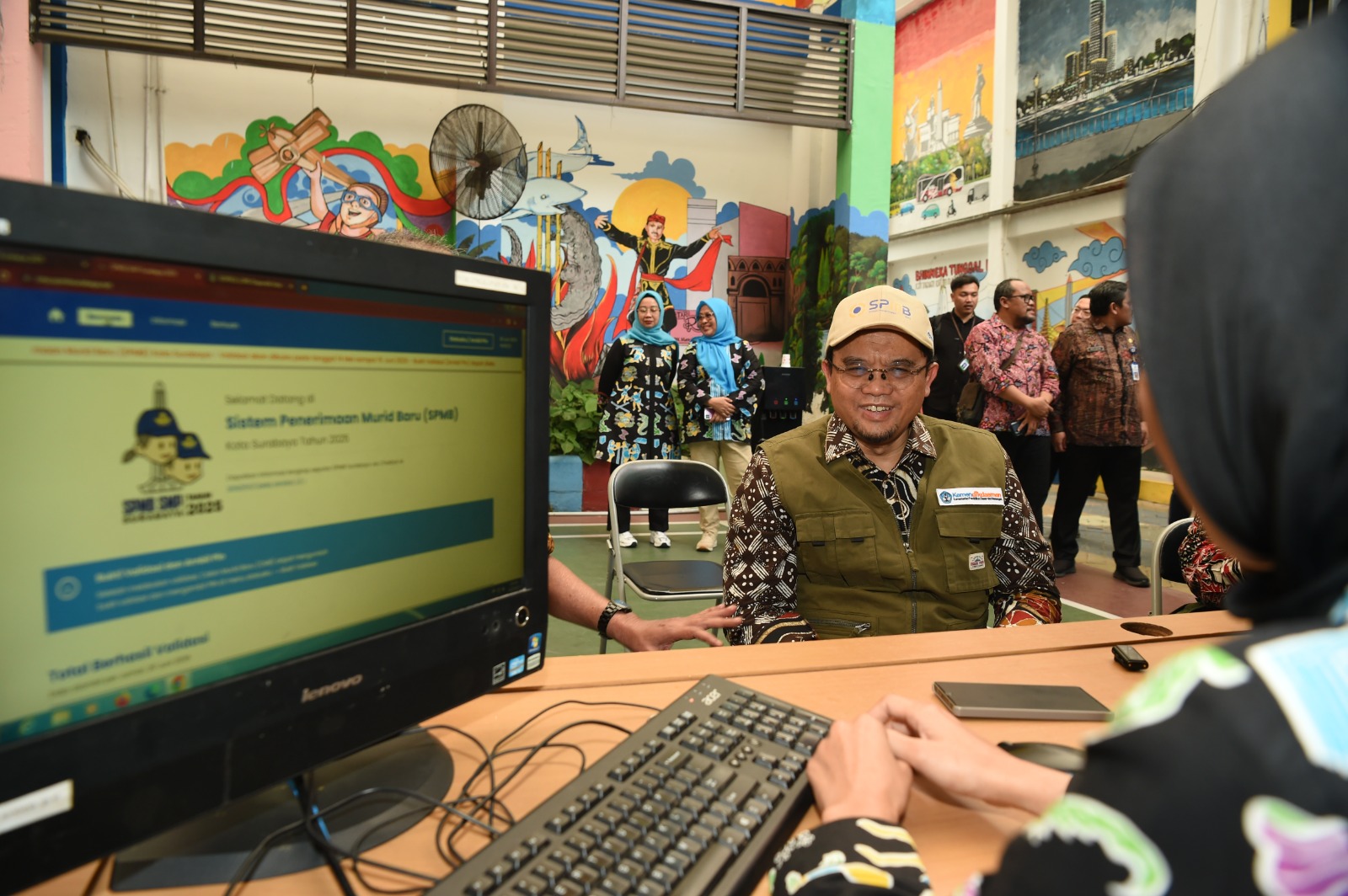
Jakarta, July 3, 2025 — The Director General of Early Childhood Education, Elementary Education, and Secondary Education (PAUD Dasmen), Gogot Suharwoto, expressed his deep appreciation to all regional governments for their commitment and active participation in mitigating the implementation of the 2025 New Student Admission System (SPMB) so that it runs successfully.
In his statement, Director General Gogot emphasized that the implementation of SPMB this year refers to the Regulation of the Minister of Primary and Secondary Education (Permendikdasmen) Number 3 of 2025. This regulation was compiled collaboratively by the Ministry of Primary and Secondary Education (Kemendikdasmen) together with the Ministry of Home Affairs (Kemendagri), the Ministry of Social Affairs (Kemensos), the Indonesian Child Protection Commission (KPAI), the Ombudsman of the Republic of Indonesia, research institutions such as the National Research and Innovation Agency (BRIN) and Research and Development (Litbang) Kompas, education associations (PGRI, AKSI, HISMINU, JPPI), parent forums, as well as practitioners and academics.
The Ministry of Primary and Secondary Education also established a Joint Supervisory Forum involving the Police, the Corruption Eradication Commission (KPK), the National Commission on Disabilities, and other relevant elements to ensure that the SPMB process is clean, objective, transparent, accountable, fair, and free from discrimination.
"Thank God, the 2025 SPMB implementation has been running smoothly as of early this month. This is the result of national cooperation. Regional governments, education offices, schools, and the community play key roles in maintaining the integrity and smooth running of the process," said Gogot in Jakarta on Thursday (July 3).
Mitigation Steps for the Implementation of SPMB 2025
Director General Gogot also explained the mitigation measures taken by the Ministry of Primary and Secondary Education to prevent unfair, manipulative, or illegal practices. These measures began with the establishment of the Joint Supervisory Forum. The Ministry established this forum early on, involving the Corruption Eradication Commission (KPK), the Police, the Ombudsman, the Indonesian Child Protection Commission (KPAI), the National Commission on Disabilities (Komnas HAM), and the Ministry of Home Affairs. This forum serves as an effective oversight mechanism to prevent extortion and bribery, promptly respond to public complaints, and oversee the implementation of the SPMB collaboratively and nationally.
Furthermore, issuing Regional Head Instructions as an Early Preventive Measure. Many regional heads have issued circulars and official instructions prohibiting student deposit practices, extortion, and other forms of gratification that could undermine the integrity of the SPMB. "This step has proven to be a strategic preventive mitigation measure," emphasized the Director General of Gogot.
Then, a Multi-Level Complaint Post was established. Complaint service posts are available at the school, education office, and central levels. The public can submit reports and consult directly. This post is not only reactive but also proactive in detecting potential problems in the field.
Next, technology integration and Dapodik validation were implemented. The SPMB (Student Registration Form) has been integrated with the Dapodik database. Capacity data locking was also implemented to prevent quota manipulation. "This step serves as a technical mitigation measure against potential system-based fraud," explained Gogot.
Following that, we responded quickly to viral issues. Issues such as queues for registration PINs, system disruptions, and allegations of extortion have been addressed through collaborative mechanisms between schools, government agencies, Technical Implementation Units (UPTs), and ministries. "This handling demonstrates a mitigation function that is not only responsive but also corrective," he explained.
Although some dynamics emerged in the field, all issues were mediated and resolved thanks to active monitoring and collaboration from educational units, related agencies, and the community.
"We hope that all parties will continue to oversee the implementation of the SPMB with full integrity and without any intervention, in accordance with the principles that have been mutually agreed upon," added the Director General of Gogot.
The Director General of Gogot also appreciated various good practices from several regions that could serve as national examples, such as 1) Collaboration with Private Schools and Educational Assistance. The implementation of SPMB is carried out in collaboration with private schools, accompanied by the provision of educational assistance for students from underprivileged families who are not accepted into public schools; 2) Declaration of Joint Commitment to Clean SPMB. Several regions initiated a joint declaration involving elements across ministries/institutions such as the Corruption Eradication Commission (KPK), the Ombudsman, the Ministry of Home Affairs, and the Police; and 3) Firm Instructions from Regional Heads. Regional governments issued firm instructions to prevent extortion, gratuities, and fraudulent practices in the new student admission process.
Furthermore, 4) Responsive and Humane Complaint Post. The complaint post is available and serves the community wholeheartedly at all levels; 5) Utilization of Dapodik-Based Technology. The use of integrated basic education data and a data locking system for capacity prevents quota manipulation; and 6) Student Involvement in Public Services. Student members of the Student Council and other extracurricular activities are involved in the registration service process, providing real-life experience in social interaction and public service.
The Director General of Gogot also expressed his appreciation for local governments that involve private schools. For example, Depok City launched the Free Private School Pilot Program (RSSG) at the junior high and Islamic junior high school levels. This program provides a concrete solution for students from low-income families who cannot be accommodated in public schools.
In closing, Director General Gogot expressed his gratitude to all parties who had actively participated in the implementation of the 2025 SPMB, including local governments, supervisory agencies, the media, the community, and parents. He expressed his hope that this synergy would continue as we approach the 2026 SPMB, in order to realize our shared vision of Quality Education for All.
Bureau of Communication and Public Relations
Secretariat General
Ministry of Primary and Secondary Education
Website: kemendikdasmen.go.id
X: x.com/Kemdikdasmen
Instagram: instagram.com/kemendikdasmen
Facebook: facebook.com/kemendikdasmen
YouTube: Ministry of Education and Culture
Questions and Complaints: ult.kemendikdasmen.go.id
Press Release from the Ministry of Primary and Secondary Education: kemendikdasmen.go.id/pencarian/siaran-pers
#QualityEducationforAll
#MinistryofEducationAndEducationFriendly