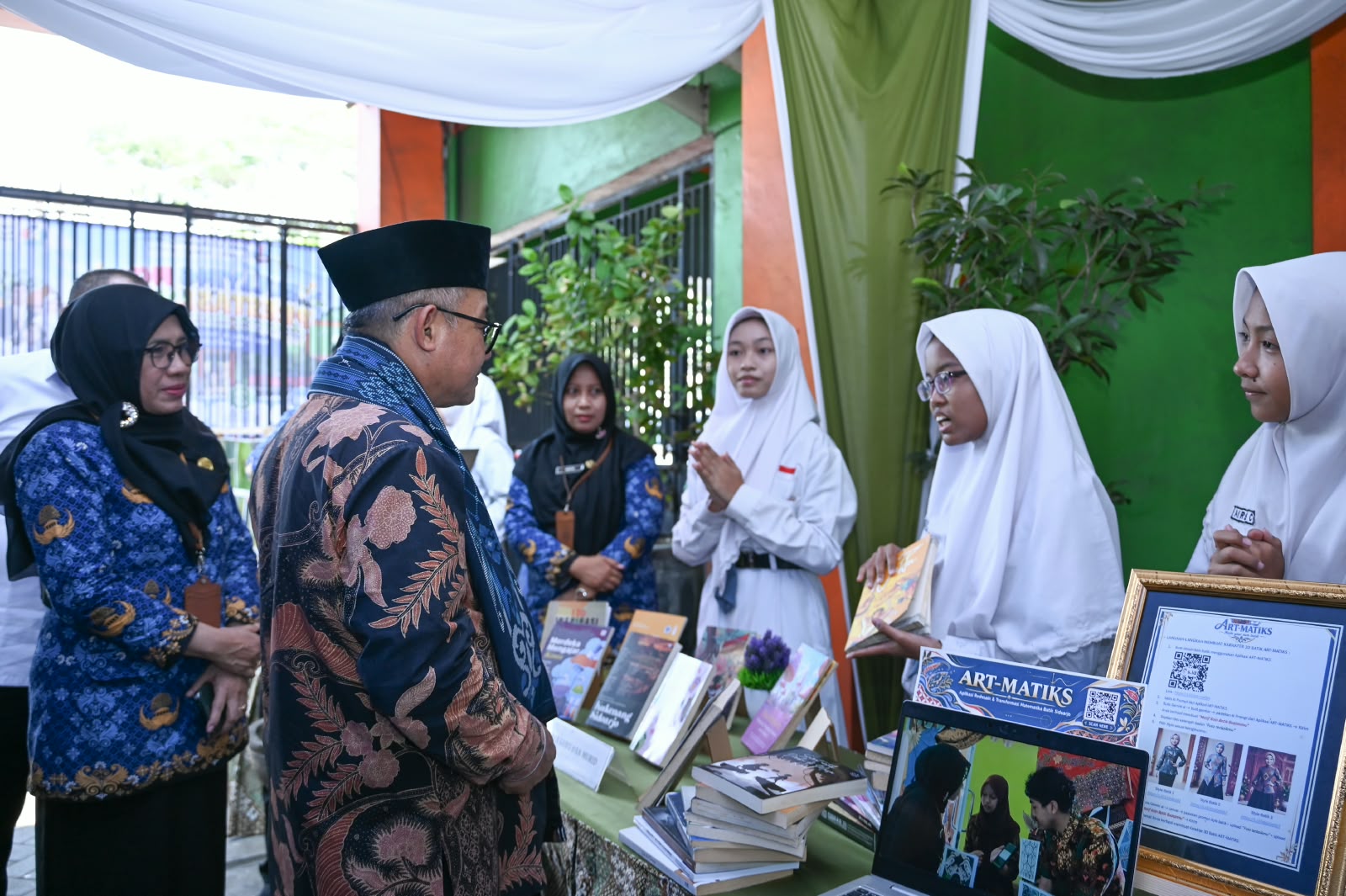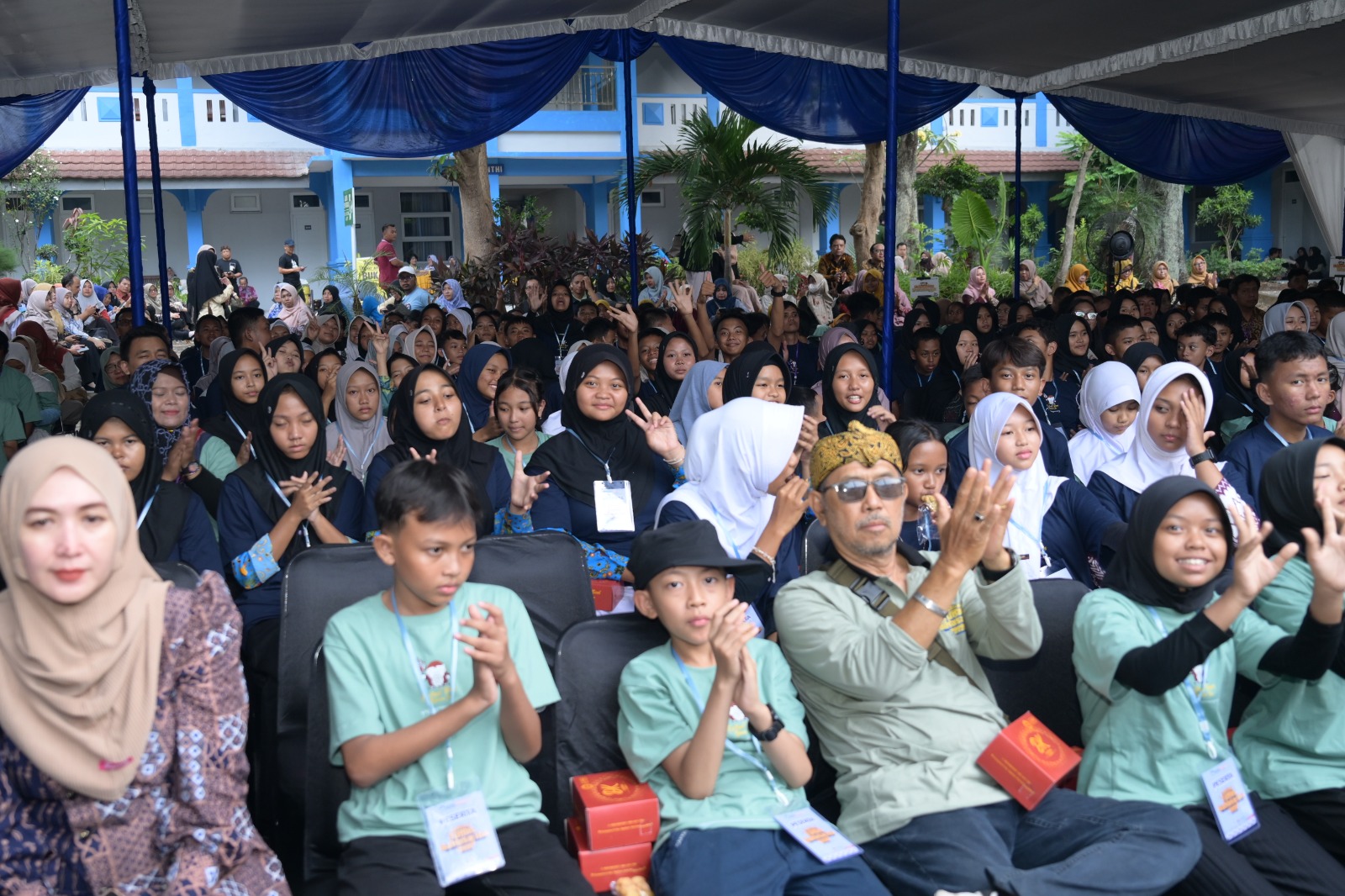


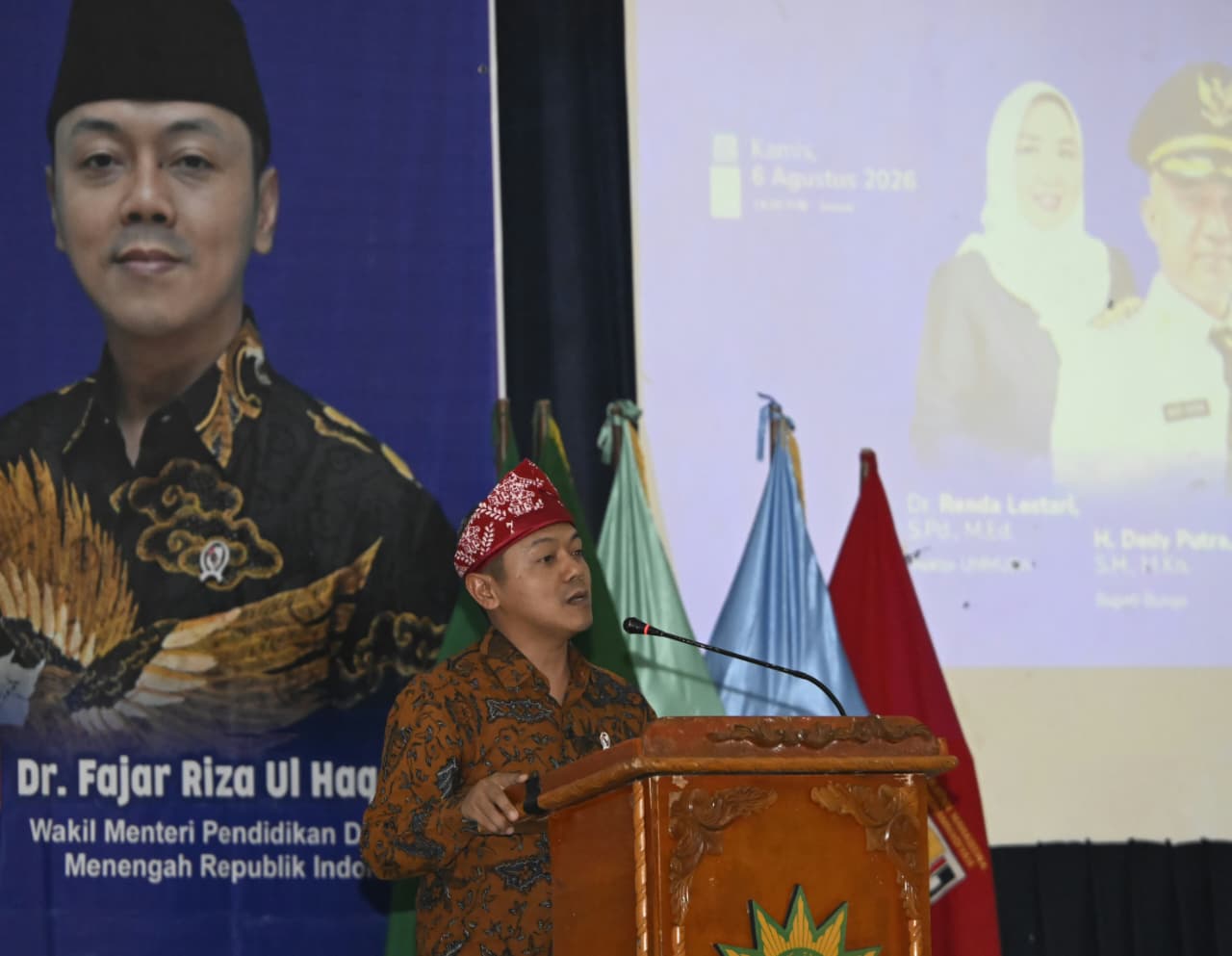
Bungo Regency, Jambi, August 7, 2026 - "It is the duty of all of us, especially the local government, to increase the Gross Enrollment Rate (APK) so that our sons and daughters in Bungo aged 16 to 18 can continue to high school, Madrasah Aliyah, or equivalent," emphasized Deputy Minister of Elementary and Secondary Education (Wamendikdasmen) Fajar Riza Ul Haq, during a working visit to Bungo Regency, Jambi Province, Thursday (6/8). Fajar highlighted data that currently only one in three high school-age residents in the region have completed high school, with the APK figure still around 67 percent.
As a concrete step to address this issue, the government, through the Ministry of Primary and Secondary Education (Kemendikdasmen), is promoting the elimination of out-of-school children (ATS), which number 4 million nationally. This strategy involves activating all educational pathways, both formal and non-formal, to ensure that children who have previously been excluded from education can re-enter the national education system. The primary focus is on three categories of out-of-school children: children who have never attended school, children who have not continued their education, and children who have dropped out .
One of the leading innovations being promoted is the Distance Learning (PJJ) program for high school students, a formal education service that is 100% non-face-to-face. Fajar explained that PJJ is specifically designed for students facing geographical, social, and economic challenges, while still ensuring quality education standards through a partnership with the Open University (UT). "PJJ is an innovative formal education service for high school students that is 100% non-face-to-face. The diplomas are the same as those for regular high school students, and we emphasize that PJJ alumni can continue their education to any university," Fajar said.
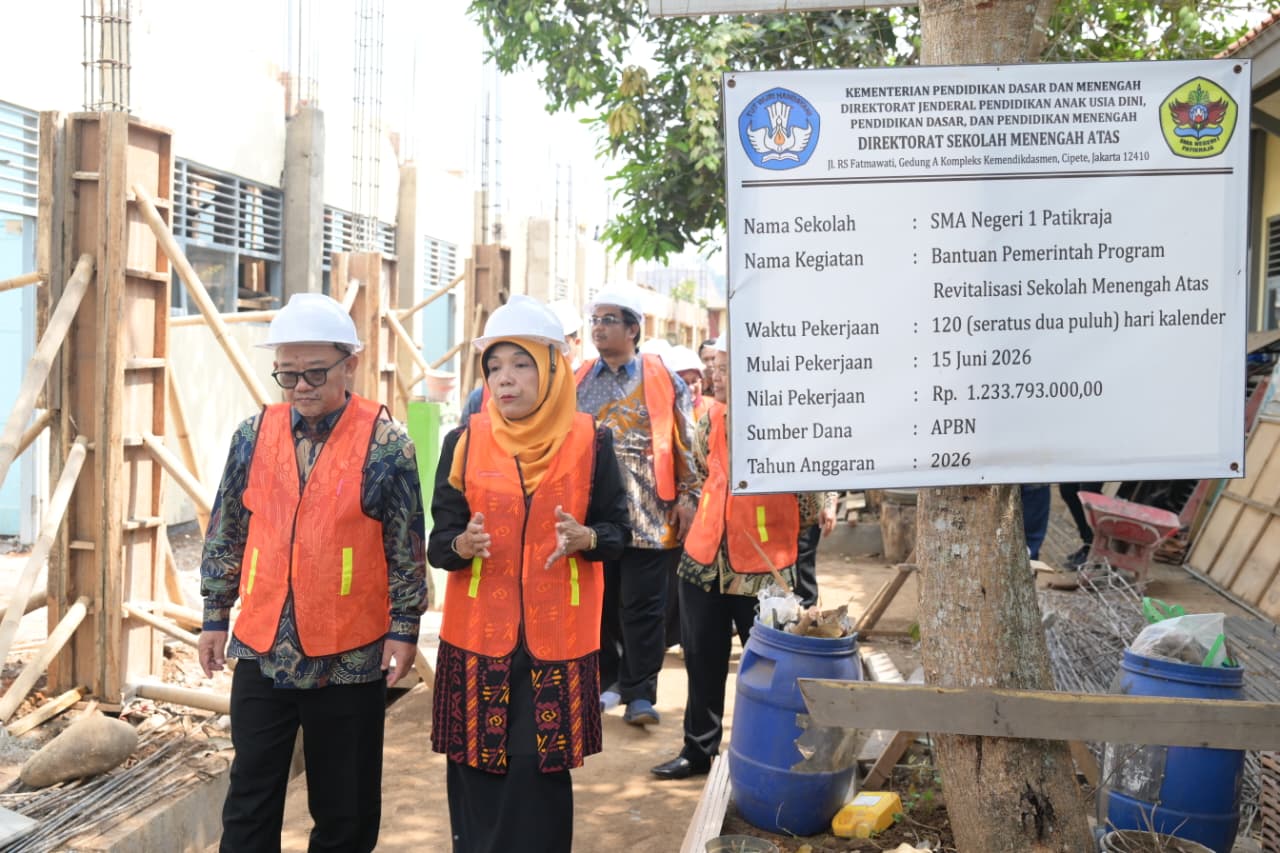
During the visit, the Deputy Minister of Primary and Secondary Education also outlined various priority programs, including accelerating the revitalization of educational facilities. Bungo Regency is listed as the largest recipient of assistance from the Educational Unit Revitalization program in Jambi Province, with a total of 63 educational units last year and reaching 60 this year. The government has even allocated a Presidential Additional Expenditure Budget (ABT) specifically to ensure school infrastructure is increasingly suitable for teaching and learning.

Technology-based educational transformation has also been highlighted through the distribution of free 75-inch Interactive Flat Panels (IFPs) to schools from preschool to junior high school in Bungo. This technology is expected to eliminate the quality barriers between schools in rural areas and those in major cities. Furthermore, the Ministry of Education and Culture has implemented a student population control policy through the New Student Admissions System (SPMB) by limiting the number of study groups (rombel) in public schools to ensure that private schools continue to have access to prospective students.
Another priority program presented was the planned development of Integrated National Schools (SNT), targeted for completion and a presence in every district by 2029. These flagship schools will be designed with comprehensive facilities, such as sports centers and dormitories, as a driving force for improving the quality of education in the region. Alumni of local educational institutions are also expected to apply for teaching positions at these schools after meeting the specified qualification and professional requirements.
Facing various educational challenges, Fajar emphasized that the success of all these programs depends heavily on synergy between the government and the private sector. He noted that 60 percent of schools in Indonesia are private, so their presence must be viewed as strategic partners, not competitors. "This spirit of partnership and collaboration is what we are developing. The government must not marginalize the role of the community in providing education," he said.
At the event, Deputy Minister Fajar again called on the local government and stakeholders in Muara Bungo to collaborate to raise the high school enrollment rate by promoting various alternative educational pathways. It is hoped that by raising the level of secondary education, access to higher education will also be more open to the public.
These strategic steps demonstrate the government's commitment to providing access to quality education for all Indonesian children. The Ministry of Primary and Secondary Education ensures that there will be no discrimination in educational services, both formal and informal, to realize the goal of educating the nation, regardless of geographic location or social status.*** (Author: Rany/Photographer: Ikram/Editor: Destya)
Bureau of Communication and Public Relations
Secretariat General
Ministry of Primary and Secondary Education
Website: kemendikdasmen.go.id
X: x.com/Kemdikdasmen
Instagram: instagram.com/kemendikdasmen
Facebook: facebook.com/kemendikdasmen
YouTube: Ministry of Education and Culture
Questions and Complaints: ult.kemendikdasmen.go.id
Press Release from the Ministry of Primary and Secondary Education: kemendikdasmen.go.id/pencarian/siaran-pers
#QualityEducationforAll
#MinistryOfEducationAndEducationFriendly