

Jakarta, September 6, 2026 — The Ministry of Primary and Secondary Education (Kemendikdasmen) urges all school residents to remain calm and prioritize safety and health during the eruption of Mount Anak Krakatau. Learning can be adjusted to local conditions and developments, with reference to local government policies as the authorities aware of field conditions.
The Minister of Primary and Secondary Education (Mendikdasmen), Abdul Mu'ti, emphasized that student and teacher safety must be a primary consideration when determining how learning will be implemented. "The protection, safety, and health of the school community are a priority," he said on Sunday (September 6).
The Minister of Elementary and Secondary Education explained that areas affected by the eruption with severe air conditions can adjust learning based on the Air Pollution Standard Index (ISPU). "In areas affected by the eruption of Mount Anak Krakatau, learning can be adjusted by referring to the ISPU. Learning activities in areas with severe air pollution, such as Serang Regency, Banten Province, and South Lampung Regency, Lampung Province, can be carried out at home online or in certain safe locations through Distance Learning (PJJ), not necessarily at school," explained Abdul Mu'ti.

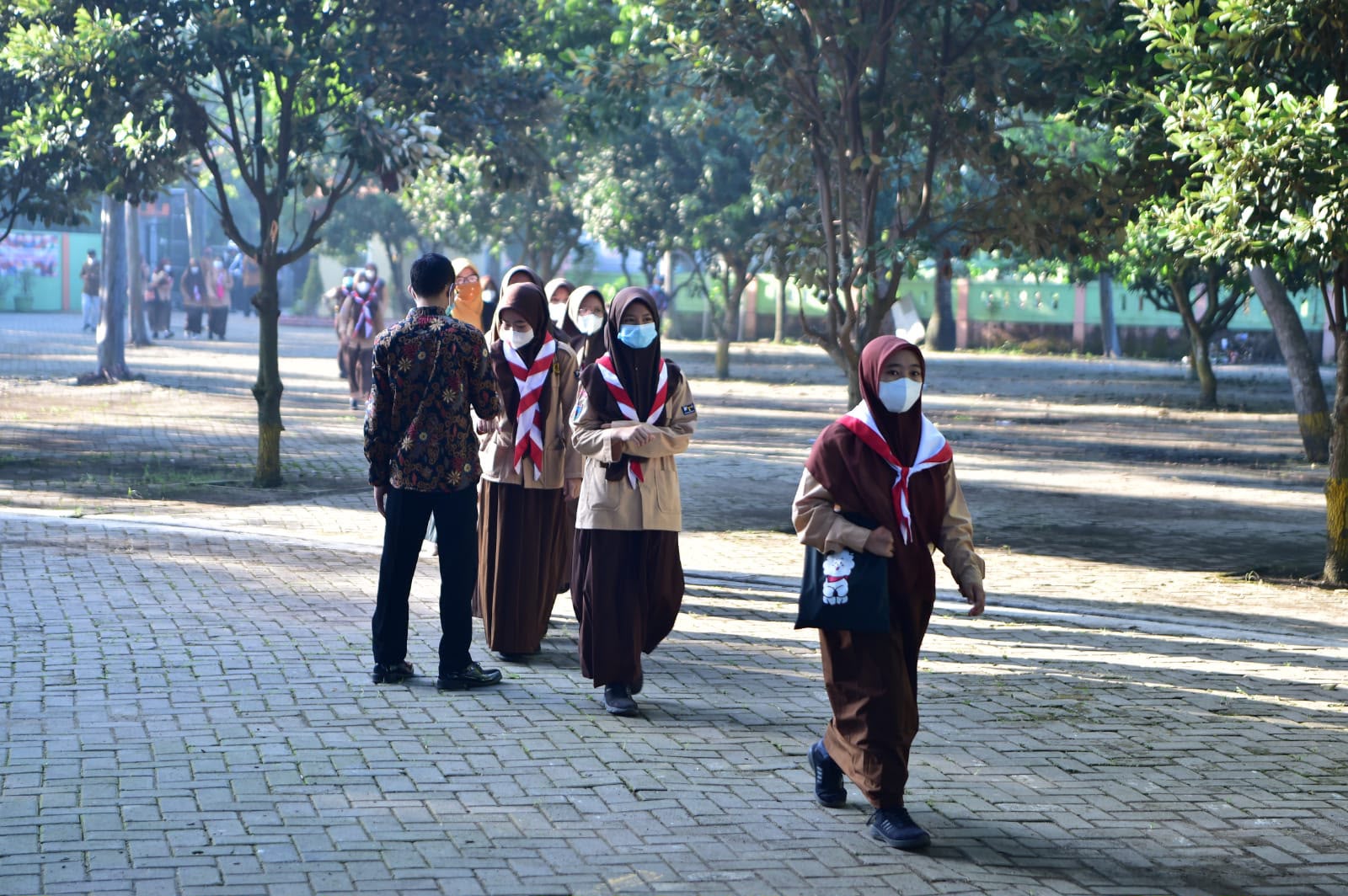
Meanwhile, in areas not directly affected, learning can continue with strict health protocols in place. "For areas not directly affected, learning can continue in schools by adhering to health protocols such as wearing masks, not conducting activities outside the classroom, closing doors and windows, and prioritizing safe teaching and learning activities," explained Abdul Mu'ti.
He added that the duration of learning can also be adjusted to suit the circumstances. "The length and hours of learning can be adjusted, but they don't have to be carried out in full, as with normal learning."
In disaster situations, schools are also expected to be spaces for building students' sense of calm and preparedness. "In between lessons, we can provide information on the importance of safety, the importance of maintaining a calm attitude and maintaining good health, and continuing to follow policy information from the authorities," he said.
The Minister of Primary and Secondary Education also emphasized that decisions regarding the implementation of learning, including distance learning (PJJ), will be based on local government conditions and policies. "PJJ can begin tomorrow, in accordance with local authorities, as each region knows the conditions. Each district/city can provide updates to the public. We are monitoring the situation through the Meteorology, Climatology, and Geophysics Agency (BMKG) because this eruption situation is very dynamic, and we cannot yet determine which regions will implement PJJ."
Abdul Mu'ti emphasized that the safety and health of students and teachers are a top priority. If conditions are declared dangerous by authorities, in-school learning should not be held. Even if learning does occur, strict health protocols must be adhered to, and activities should not take place outside the classroom. For indoor activities, doors and windows should be securely closed to prevent dust from entering.
"In-person school meetings are strongly discouraged in unsafe areas, but everyone must follow local government authority. We advise teachers and students to follow local government policies. If Jakarta has decided to resume online learning tomorrow, everyone must follow suit," Abdul Mu'ti emphasized. Meanwhile, other regions that have not yet made a decision are urged to inform the public as soon as possible to prevent any untoward incidents.
The learning policy in disaster situations refers to the Minister of Education and Culture Regulation Number 33 of 2019 concerning the Implementation of the Disaster-Safe Education Unit Program (SPAB), Regulation of the Secretary General of the Ministry of Education, Culture, Research, and Technology Number 6 of 2023 concerning Technical Instructions for the Implementation of the SPAB Program, Circular Letter of the Minister of Elementary and Secondary Education Number 1 of 2026 concerning the Implementation of Learning in Disaster-Affected Education Units, and the Disaster Education Implementation Guidelines (2026). Related information and regulations can be accessed through the page bkpdm.kemendikdasmen.go.id/TangguhBencana .
On the same occasion, the Minister of Home Affairs (Mendagri), Tito Karnavian, said that the government continues to coordinate with the BMKG and the National Disaster Management Agency (BNPB) to monitor developments in the situation and reduce the impact on the community.
Tito also reminded school residents and the community to continue following official information. "If learning activities are still possible, school residents should continue to monitor the situation. Outdoor activities must be adjusted to the evolving security situation. Follow official information from the BMKG, BNPB, and others. Reduce outdoor activities if there is an increase in ash distribution. Be careful about ash contamination of food and water sources," he said.*** (Author: Denty A./Documentation: Nurlaili)
Bureau of Communication and Public Relations
Secretariat General
Ministry of Primary and Secondary Education
Page: kemendikdasmen.go.id
X: x.com/Kemdikdasmen
Instagram: instagram.com/kemendikdasmen
Facebook: facebook.com/kemendikdasmen
YouTube: Ministry of Education and Culture
Questions and Complaints: ult.kemendikdasmen.go.id
Press Release from the Ministry of Primary and Secondary Education: kemendikdasmen.go.id/pencarian/siaran-pers
#QualityEducationforAll
#MinistryOfEducationAndEducationFriendly