

Jakarta, April 1, 2022 – Minister of Education, Culture, Research, and Technology (Mendikbudristek), Nadiem Anwar Makarim, launched the Nineteenth Episode of the Merdeka Belajar program: Indonesia's Education Report. "The Education Report platform is designed to make it easier for heads of educational units and education offices to map the state of education in their units or regions," said the Minister of Education, Culture, Research, and Technology, at the online launch of the Indonesian Education Report on Friday (April 1).
The Minister of Education, Culture, Research, and Technology further stated that the Indonesian Education Report is also intended for educational units and regional governments to identify educational challenges in educational units and serve as a basis for reflection, enabling them to formulate more precise and data-based educational improvement plans.
To optimize the use of the Education Report Platform, the Ministry of Education, Culture, Research, and Technology (Kemendikbudristek) has coordinated with the Ministry of Home Affairs (Kemendagri) and other ministries and institutions since October 2021 and has reached an agreement to use Education Report data to measure compliance with Minimum Service Standards (SPM).
"The Education Report Card data is used as an indicator of regional government performance in the education sector, as stipulated in the Minister of Home Affairs Regulation (Permendagri) Number 59 of 2021 concerning Minimum Standards (SPM)," said the Minister of Education, Culture, Research, and Technology.
The Education Report platform contains indicators that reflect eight national education standards: graduate competency standards, content standards, process standards, assessment standards, management standards, teacher and education personnel (GTK) standards, funding standards, and infrastructure standards. Therefore, the Education Report provides access to this information for educational units and education offices.
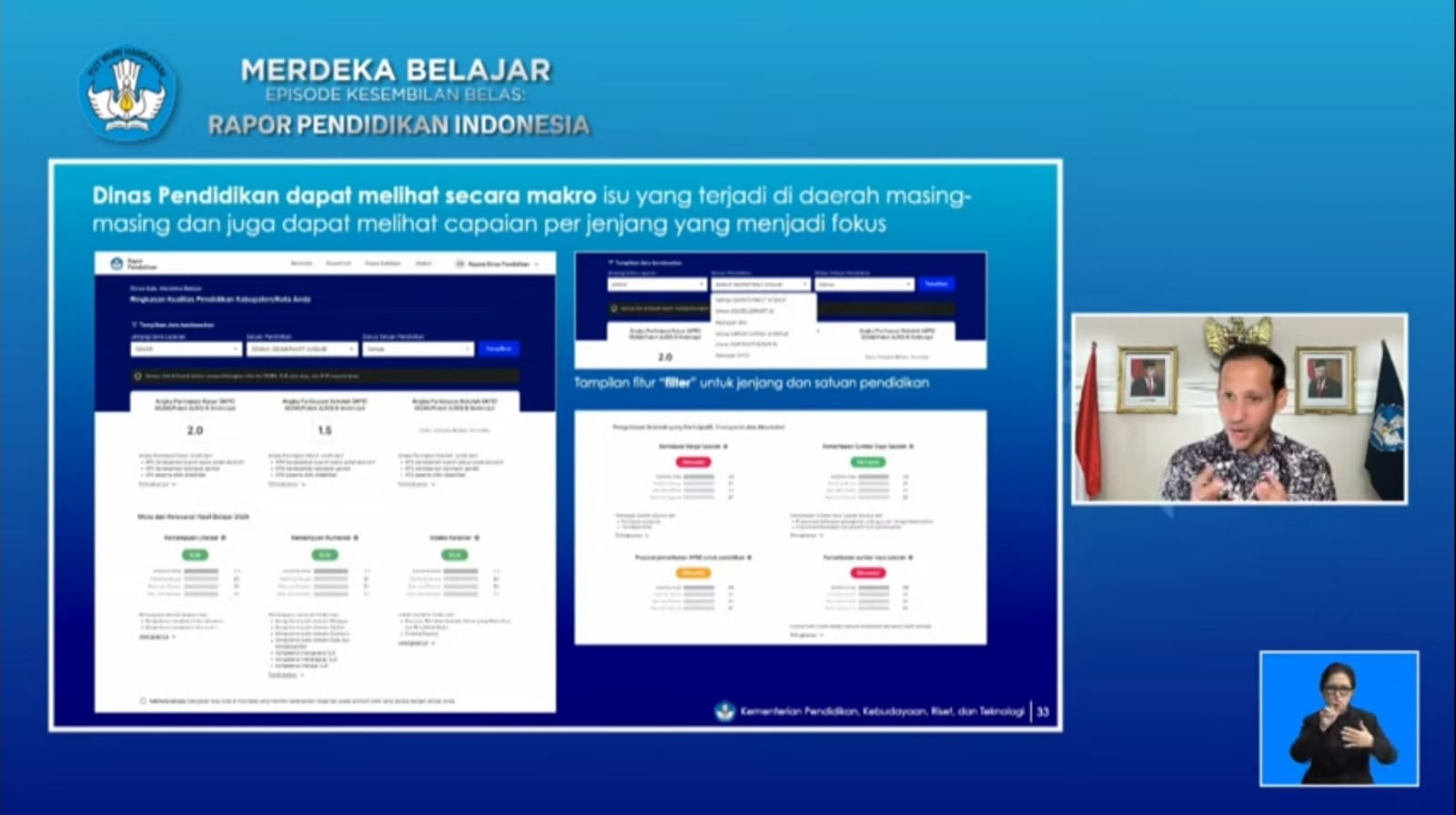
"Educational units can view elements per dimension in detail, thereby exploring the state of learning outcomes and processes in their respective locations. Furthermore, the Education Office can examine issues in their respective regions at a macro level and assess achievements at each level of focus," explained the Minister of Education, Culture, Research, and Technology.
Furthermore, the Minister of Education, Culture, Research, and Technology emphasized that this first-year Education Report only serves as a baseline for mapping the initial conditions of key indicators. The success of educational units and regional governments reflects year-to-year progress, not rankings between regional governments or educational units.
"What's important is that local governments and educational institutions can use the Education Report to identify problems, reflect, and continuously improve educational services," he said.
Education Report Card data enables the government, local governments, educational units, educators, and parents to understand the real problems faced by children in the learning process, so that every part of this system can formulate more focused and targeted policies.
As the discussion drew to a close, the Minister of Education, Culture, Research, and Technology expressed his hope that changes in the quality of education would be felt, starting with classroom learning and the management of educational units, driven by learning quality indicators in the Education Report Card and other programs such as the Independent Curriculum and the Independent Teaching Platform.
"By utilizing the Education Report Card data, the policy direction of the government, regional governments, and educational units will all focus on improving the quality of educational services so that they are more aligned," said the Minister of Education, Culture, Research, and Technology.
The Head of the Education Standards, Curriculum, and Assessment Agency (BSKAP) of the Ministry of Education, Culture, Research, and Technology, Anindito Aditomo, added that the Indonesian Education Report Card is the result of collaboration with the Ministry of Religious Affairs in implementing the National Assessment (AN) in madrasas and the Ministry of Home Affairs in aligning SPM indicators in the education sector.
"So, this Education Report Card is the result of collaborative efforts from various parties. Thank you, Minister, for your willingness to launch this initiative, which is a vital part of our efforts to realize the ideals of Freedom to Learn," said Anindito.


Bureau of Cooperation and Public Relations
Secretariat General
Ministry of Education, Culture, Research, and Technology
Website: kemdikbud.go.id
Twitter: twitter.com/Kemdikbud_RI
Instagram: instagram.com/kemdikbud.ri
Facebook: facebook.com/kemdikbud.ri
Youtube: Ministry of Education and Culture of the Republic of Indonesia
Questions and Complaints: ult.kemdikbud.go.id
Get complete information about Merdeka Belajar through: http://merdekabelajar.kemdikbud.go.id
#FreedomToLearn
#EducationReport
#IdentificationReflectionFix
The Minister of Education, Culture, Research, and Technology further stated that the Indonesian Education Report is also intended for educational units and regional governments to identify educational challenges in educational units and serve as a basis for reflection, enabling them to formulate more precise and data-based educational improvement plans.
To optimize the use of the Education Report Platform, the Ministry of Education, Culture, Research, and Technology (Kemendikbudristek) has coordinated with the Ministry of Home Affairs (Kemendagri) and other ministries and institutions since October 2021 and has reached an agreement to use Education Report data to measure compliance with Minimum Service Standards (SPM).
"The Education Report Card data is used as an indicator of regional government performance in the education sector, as stipulated in the Minister of Home Affairs Regulation (Permendagri) Number 59 of 2021 concerning Minimum Standards (SPM)," said the Minister of Education, Culture, Research, and Technology.
The Education Report platform contains indicators that reflect eight national education standards: graduate competency standards, content standards, process standards, assessment standards, management standards, teacher and education personnel (GTK) standards, funding standards, and infrastructure standards. Therefore, the Education Report provides access to this information for educational units and education offices.
"Educational units can view elements per dimension in detail, thereby exploring the state of learning outcomes and processes in their respective locations. Furthermore, the Education Office can examine issues in their respective regions at a macro level and assess achievements at each level of focus," explained the Minister of Education, Culture, Research, and Technology.
Furthermore, the Minister of Education, Culture, Research, and Technology emphasized that this first-year Education Report only serves as a baseline for mapping the initial conditions of key indicators. The success of educational units and regional governments reflects year-to-year progress, not rankings between regional governments or educational units.
"What's important is that local governments and educational institutions can use the Education Report to identify problems, reflect, and continuously improve educational services," he said.
Education Report Card data enables the government, local governments, educational units, educators, and parents to understand the real problems faced by children in the learning process, so that every part of this system can formulate more focused and targeted policies.
As the discussion drew to a close, the Minister of Education, Culture, Research, and Technology expressed his hope that changes in the quality of education would be felt, starting with classroom learning and the management of educational units, driven by learning quality indicators in the Education Report Card and other programs such as the Independent Curriculum and the Independent Teaching Platform.
"By utilizing the Education Report Card data, the policy direction of the government, regional governments, and educational units will all focus on improving the quality of educational services so that they are more aligned," said the Minister of Education, Culture, Research, and Technology.
The Head of the Education Standards, Curriculum, and Assessment Agency (BSKAP) of the Ministry of Education, Culture, Research, and Technology, Anindito Aditomo, added that the Indonesian Education Report Card is the result of collaboration with the Ministry of Religious Affairs in implementing the National Assessment (AN) in madrasas and the Ministry of Home Affairs in aligning SPM indicators in the education sector.
"So, this Education Report Card is the result of collaborative efforts from various parties. Thank you, Minister, for your willingness to launch this initiative, which is a vital part of our efforts to realize the ideals of Freedom to Learn," said Anindito.
Bureau of Cooperation and Public Relations
Secretariat General
Ministry of Education, Culture, Research, and Technology
Website: kemdikbud.go.id
Twitter: twitter.com/Kemdikbud_RI
Instagram: instagram.com/kemdikbud.ri
Facebook: facebook.com/kemdikbud.ri
Youtube: Ministry of Education and Culture of the Republic of Indonesia
Questions and Complaints: ult.kemdikbud.go.id
Get complete information about Merdeka Belajar through: http://merdekabelajar.kemdikbud.go.id
#FreedomToLearn
#EducationReport
#IdentificationReflectionFix